Published: |
Why doesn’t productivity work
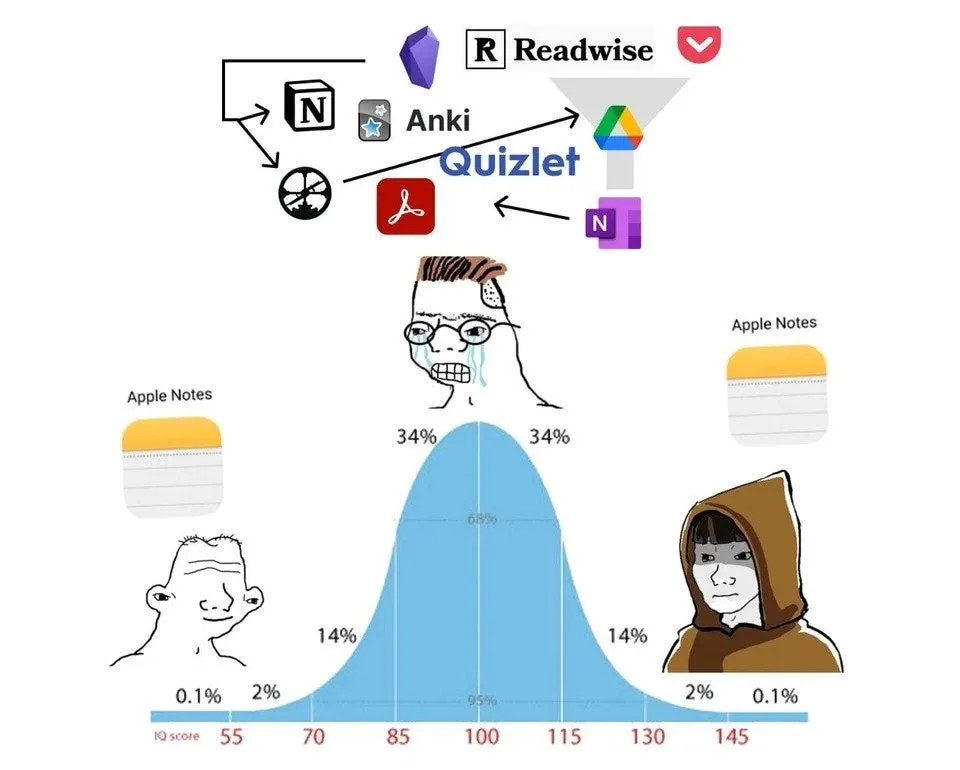
Sometimes ago, I was over-whelmed by the number of things I need to do. I feel like a new productivity app could help: maybe a todo list, maybe a new note-taking app, maybe a mindful app, maybe a new routine.
Maybe I need to categorising my tasks to different projects. What about aligning them with long-term goals. What about the time-boxing methodology. Maybe I need to gamify my approach. Maybe I need to share my results with others. Maybe…
Suddenly, this feeling feels familiar. I’ve been here before.
This time, instead of looking for another external matter that promises success, I got pulled to a different gravitational force and realised they are actually blocking me from doing what really matters: the hard, unconscious, and unseen work.
The cookbook is not cooking
Say I’m trying to improve my cooking skills.
I started by thinking about which cookbooks to buy.
Maybe one with the best recipes. Maybe one written by a famous chef. Maybe one with the best reviews. Maybe one with plenty images and clear steps to follow. Maybe one with a comprehensive list of ingredients and equipments to get. Maybe…
Next thing, I have bought a selection of great cookbooks. They look nice on the kitchen shelf. Sometimes I like to flick through them to get inspired. Sometimes I will actually follow a recipe and cook a dish.
But in the end, I will not dare to call myself a masterchef just because I read a top-notch cookbook or own a few fancy cooking pans.
What I’m missing is the unglamorous, repetitive, and time-consuming work.
Putting the cooking analogy aside, this pattern is everywhere in life.
There’s always some products on the market brand themselves as “essentials” or “must-haves”.
There’s always testimonials or inspirational stories to show how they worked for others.
What happens when we change our notes-taking app, do we lose our ability to write?
What happens when we are stuck with a bad project management tool or methodology, do we fail to deliver projects as a team?
What happens when the music stops during our run, do we give up on the running?
Is it that I just haven’t found the perfect setup yet? or most of them are distractions?
Distractions
In Homer’s Odyssey, before Odysseus cruise over Sirenum Scopuli, he ordered all of his sailors plug their ears with beeswax, and bounded himself to the mast of his ship to resist the siren’s calls which lure sailors to their deaths.
Today, these “productivity deaths” could look like the form of binge-watching or doom-scrolling.
The Odysseus story tells the uncomfortable limitations we have to put ourselves into when facing distractions.
Today’s complexity are that we need to be meticulously careful with our limitations across physical, digital, and mental spaces.
Physically, we might have to learn to say no, reduce social events, resist addictions (food, drinks, entertainment etc) and prioritise our time.
Victor Hugo (author of Les Misérables and The Hunchback of Notre Dame), when faced with tough deadlines, told his assistants to take his clothes away and lock him in a room. This forced him to stay at his desk and write.
Digitally, we might need to reduce notifications, “deep work”, app blockers, use software mindfully, ignore unnecessary features etc.
We should be wary that technology today faces constant churns and new products or ideas being released daily, the “next best thing” may not the real solution either.
Even existing tech ignores their fundamentals, and constantly re-evolving themselves with the whatever the new trendy marketing word is.
Mentally, we may fall for common fallacies like “You can’t improve what you can’t measure”.
We may read too many content online and always bookmarking the “10 tips I wish I knew earlier” and blindly trying to implement them onto our workflows.
We may feel busy and overwhelmed, and align these extra efforts with “I am are being productive”.
We may be eagerly waiting for the next big thing, because we think we are not efficient enough and this new hot thing might solve everything.
We may be focusing too much on quantity over quality. The belief that a higher numbers of completed tasks leads to success, while ignoring the alternatives or the blindspots we might have missed.
We may be ignoring the implicit. Just because something cannot be measured or doesn’t fit within the norm (say _“doing nothing or go for a walk”), doesn’t mean they are not worthwhile.
We cannot discard the values of these what seems to be unproductive work, as our brain actually use these quiet times to consolidate and generate wisdoms.
The real work is unseen
Today, it is becoming increasing easier to make your work “seen”.
On Notion, after spend hours crafting a template, why not share it with the world? Promote it on their marketplace and maybe even make few bucks from selling.
On Strava, we can post runs, workouts, and get kudos and comments. Vice versa, we can interact with the others, and post screenshots onto other social media platforms.
What about Instagram? TikTok? LinkedIn? Twitch? YouTube? X?
There certainly are benefits to make your work seen: the early feedbacks, the motivation, the dopamine from recognition, the urge to improve, the social bond between us and the community…
But to broadcast our work, we have to compete against everything from AI generated slop, click-baits, rage-baits, fake news, content farms, professionalised influencers, paid/sponsored ads, algorithmic feeds…
Amateurs posting content against these feels cringe, as if “posting” has turned into some kind of competition. There are standards to be held, and those who only post irregularly ruined that standards or disrespected the hard works the professionals have built.
When our “seen” work does not get its worth of attentions, do we feel let down or demotivated?
When our “seen” work receives criticism from strangers, do we feel the need to adjust our methodologies to please the audience?
How will this fluctuation of external factors have an impact on ourselves?
In “Thinking, Fast and Slow”, Daniel Kahneman dedicated the entire book to highlight that while we may believe our conscious thoughts (the prefrontal cortex) is in control, much of our thinking and behaviours are, in fact, decided by the automatic, subconscious processes that lives in the other parts of the brain.
Through habits and internal dialogues, our repetitive actions gradually carve out neural pathways, making those behaviours more automatic and less reliant on conscious efforts.
When we receive external influences, these messages may appear negative, confusing or contradicting. They will shape our perceptions and emotional responses in line with those external beliefs.
In contrast, when we derive positive and encouraging internal dialogues from private disciplines, we can cultivate and sustain a more resilient subconscious framework.
The “unseen” internal clarity and agency are the main drivers to productivity.
Charles Darwin, famously walked in his garden daily to reflect his theories and formulate new ideas. The walk is simple, no notes, no walking partners, he would just circle the same paths, multiple times a day, for hours.
David Goggins, highly accomplished ultramarathoner and author, talked about how 99% of his training was done by himself. And he attributed this solitude to how he “extracted everything from nothing”.
Closing notes
Modern productivity never lacked options and why do we still feel lost?
Why is pen and paper (sometimes a single text file) still the undisputed champions in the age of computers and software?
There’s a shift in modern world that works against our intentions.
We may feel the work is not “done” unless a monthly subscription is paid, the latest updates or features are learnt, or we received dopamine highs from external validations.
Next time, when trying to pick another solution to be more productive:
- pick the one that stands against the test of time
- pick the one with less distractions
- pick the one that let you hear the internal dialogues
- pick the one that you will use it every day
- last but not least, pick yourself